Commissioned under the Victorian Government’s Level Crossing Removal Project (LXRP), Bell and its sister Preston Station were part of a transformative infrastructure initiative. The works involved the removal of four level crossings, aiming to dramatically improve pedestrian and road safety while elevating the commuter experience.


The Prix Versailles, now in its 10th year and held at UNESCO Headquarters, celebrates architecture that fuses innovation, sustainability, and cultural relevance. The distinguished jury—featuring internationally celebrated figures such as Daniel Libeskind, Sou Fujimoto, David Adjaye, and Wang Shu, and chaired by Benjamin Millepied—noted Bell Station for its thoughtful integration into the urban fabric and its nuanced architectural language.

Prix Versailles’ jury citation:
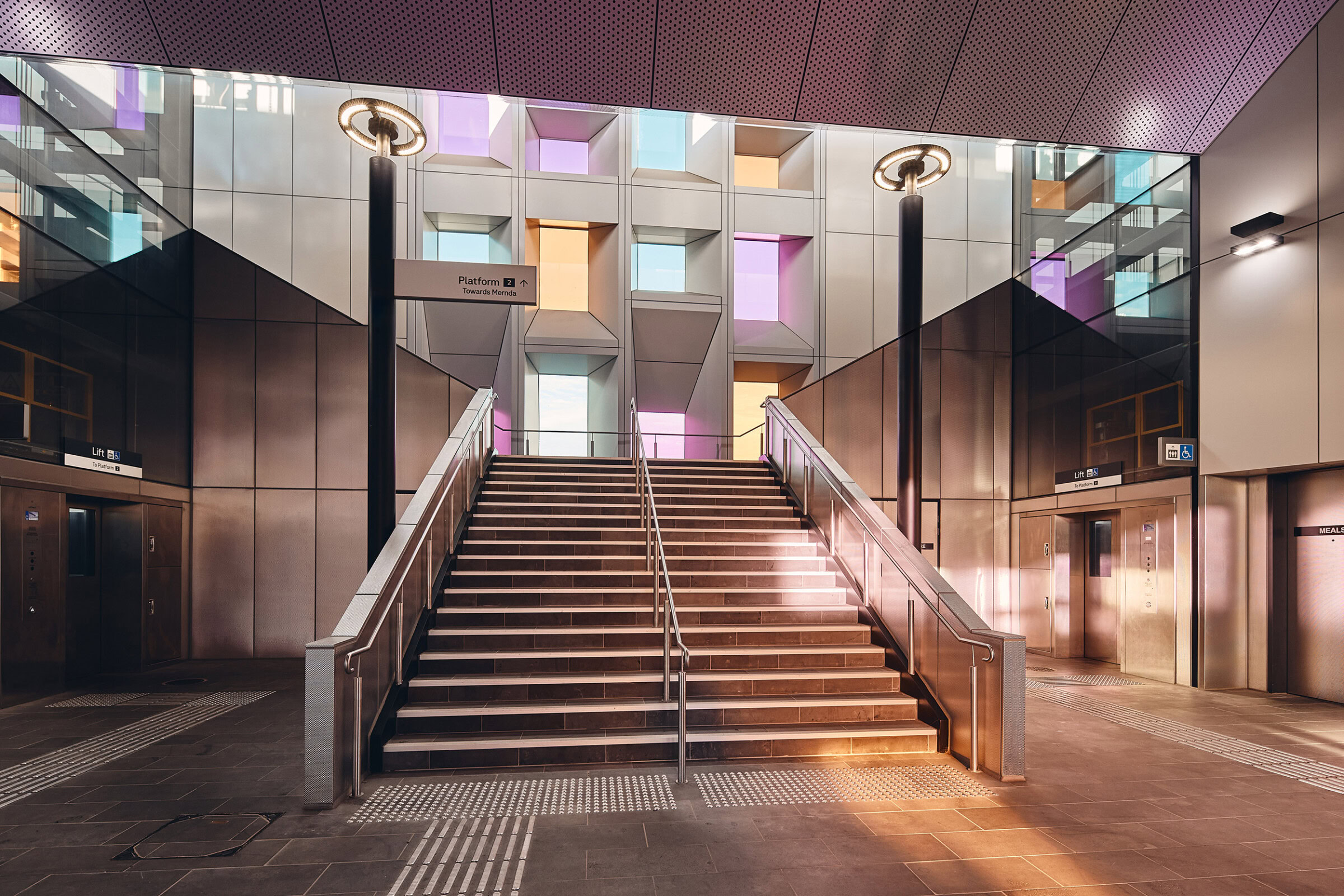
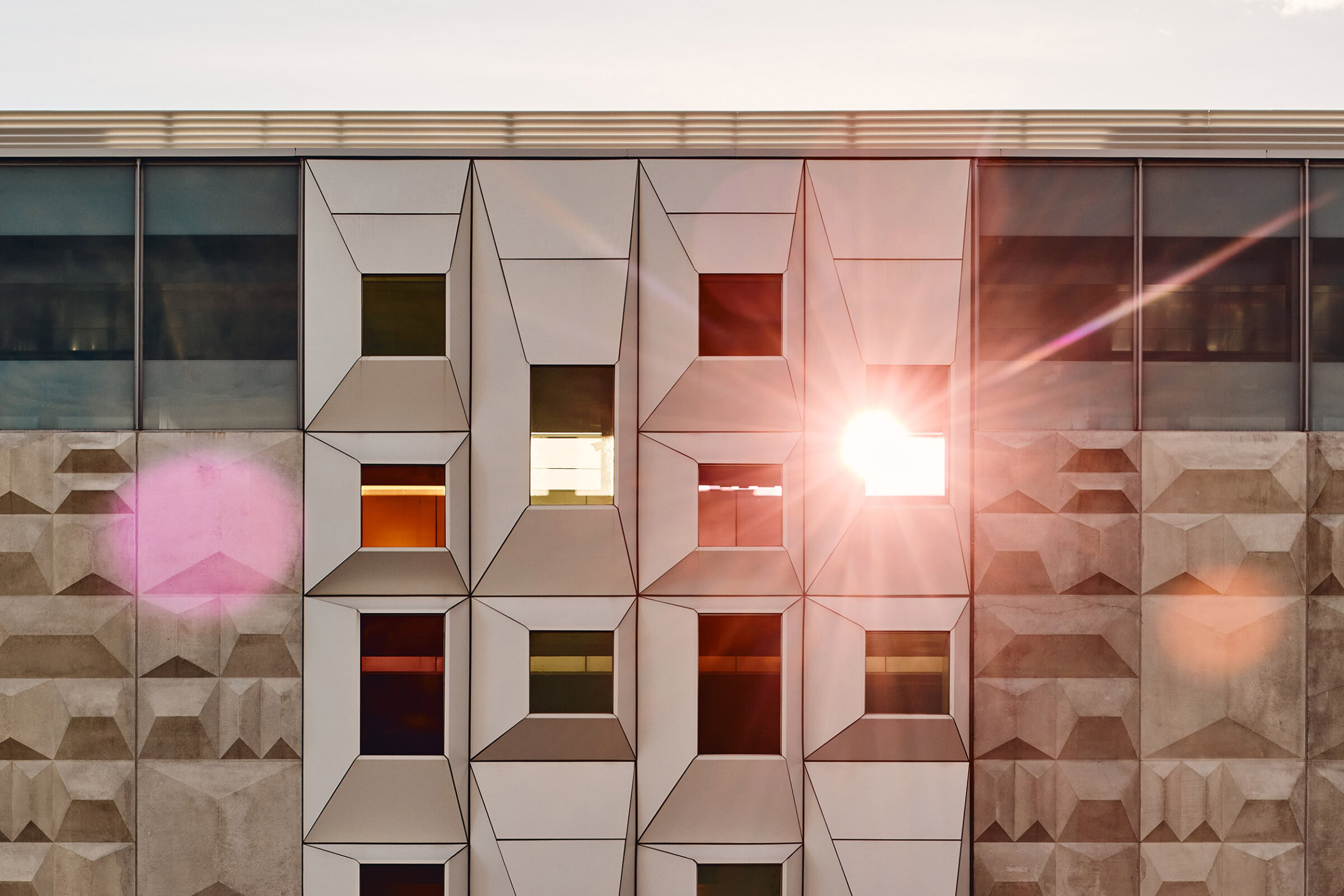
In the sprawling expanses of Australia, level crossings become a boundary, if not a scar, when cities catch up with history. This was the case for Melbourne, where a vast urban design and landscape plan was launched. Born of the talent and imagination of the Wood Marsh studio, Bell, and Preston Stations were part of a new generation of elevated railway stations. It stands out for its concrete façade – a nod to the heritage-listed housing ringing the site – with a three-dimensional pattern representing the roofscape of the city of Darebin. Multi-coloured glass windows filter the light, spreading a gentle yet invigorating atmosphere throughout the concourse. In a blend of culture and preparedness, a public amphitheatre doubles as a flood basin. Part of Greater Melbourne, this project was by no means short on ambition, whether in terms of inclusivity or ecology, as evidenced by the many lawns and strips of native plants surrounding the entrances. This amazing structure is helping to breathe new life into the urban landscape by flawlessly embodying the concept of intelligent sustainability.